

Watch the audiovisual capsules from the School of Listening
The audiovisual capsules from The School of Listening are now available, systematizing and communicating different dimensions of the work developed in the participating educational establishments. The short videos capture the experiences of students and teachers, as well as the conceptual and institutional framework of the project, highlighting listening as a tool for research, pedagogy, and social and territorial reflection. The audiovisual material was produced by FIBRA.
There are 6 capsules that can be found on the CMUS YouTube channel and they are as follows:
1. Listening in a different way: lessons and experiences at the School of Listening
What does it mean to listen beyond simply hearing? In this first video from The School of Listening, high school students share their experiences, reflections, and discoveries after participating in this educational project developed by the Millennium Nucleus in Musical and Sound Cultures (CMUS). Through sound exploration exercises and collective reflection, the students revisit their relationship with everyday sounds, recognizing how active listening transforms the way they inhabit spaces, connect with others, and build community identity.
2. Listening to investigate: territory, citizenship and gender through sound
In this second installment of The School of Listening, students from various educational institutions present their experiences working on the project’s thematic areas: environment and territory, migration and citizenship, and culture and gender relations. Through attentive listening and the recording of their communities’ soundscapes, the participants reflect on how sound can become a tool for social research, capable of revealing conflicts, transformations, memories, and forms of coexistence that often go unseen in written texts. 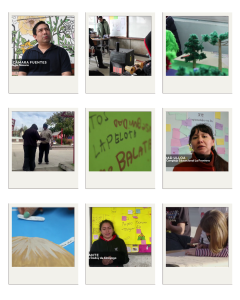 nor in traditional discourses.
3. Listening to memory: stories, sounds and intergenerational links
In this third installment of The School of Listening, students share their experiences of sound and aural research in the community, based on interviews conducted with older adults in their local areas. Through attentive listening to voices, stories, and memories, the work allowed access to individual and collective memories that are activated not only by words, but also by the sounds of the past and present. Bells, traditional trades, music, and soundscapes that have disappeared or been transformed emerge as living traces of local history.
4. Learning by listening: experimentation and sound pedagogies
In this fourth installment of The School of Listening, students share their experiences with the workshop’s main activities, highlighting the experimental, playful, and sensory nature of this pedagogical approach. Through active listening exercises, field recordings, sound games, and group activities, the project proposes learning methods that move away from traditional approaches based solely on the written or spoken word. Instead, sound, the body, and shared experience become central tools for learning.
5. Listening to educate: teachers’ perspectives and impact on the school community
This fifth installment of The School of Listening gathers the perspectives of teachers and educational teams from participating schools, who evaluate the program’s implementation and reflect on its impact on the school community. From their classroom experiences, the teachers observe transformations in how students relate to sound, the environment, and each other, as well as the development of listening, attention, critical thinking, and collaborative skills. The installment also addresses the opportunities and challenges of integrating an experiential and sensory methodology into the formal educational context.
6. Why listen? Origin and meaning of the School of Listening
En esta sexta cápsula de La Escuela de la Escucha, Daniel Domingo Gómez, Coordinador Ejecutivo del Núcleo Milenio en Culturas Musicales y Sonoras (CMUS), y Constanza Tobar Tapia, asistente de investigación CMUS, contextualizan el origen, los objetivos y el sentido del proyecto de vinculación con el medio La Escuela de la Escucha. A lo largo del video, se presenta el marco general del CMUS como una plataforma de investigación interdisciplinaria que estudia la música, el sonido y la escucha para comprender los procesos de cambio y continuidad de la sociedad chilena. Desde ese enfoque, se explica cómo surge la Escuela de la Escucha como una propuesta educativa que traslada herramientas de investigación sonora y aural al ámbito escolar, promoviendo la escucha crítica, la reflexión colectiva y el vínculo con los territorios locales.
You can watch all the videos below: